“When was the first time you learned about menstruation?” By Asika Ghemosu
Was it through a safe conversation? A school lesson? A friend? Or was it through fear, confusion, embarrassment, or restrictions?
This is a question I often ask during community sessions, and the answers are rarely simple.
As an SRHR advocate in Nepal, I have met girls who thought periods were something to be hidden at all costs. Some believed they should not touch plants, enter kitchens, attend religious spaces, or even talk loudly during menstruation. What surprises me is not only the existence of these beliefs, but how normal they have become for so many girls growing up.
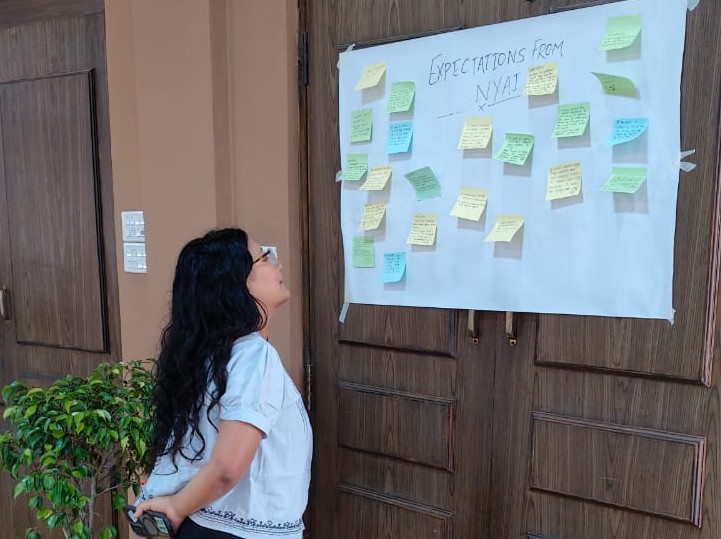
I remember one session where everyone stayed silent when we started talking about menstruation. But after a while, one girl quietly asked, “Is it normal to feel scared every month before my period comes?” That single question changed the entire room. Suddenly, others began sharing too, about missing school, hiding pads inside bags, or feeling ashamed of stains more than the pain itself. I also remember reading about Kamala Dami, a young girl from western Nepal who died after a snake bite while staying in a chhaugoth (chapuadhi pratha in Nepal) during menstruation.
Stories like hers remind us that menstrual stigma is not just about culture or tradition, it can become a matter of dignity, safety, and even survival. Even in places where chhaupadi huts no longer exist, many still face restrictions that make them feel “impure” for something completely natural.
And honestly, it made me wonder: how many of them are carrying these fears silently every single day?
We often discuss menstrual health in terms of products and hygiene, which are important. But what about dignity? Confidence? The freedom to ask questions without feeling embarrassed? What about the emotional burden of constantly being told your natural body must stay hidden?
Sometimes stigma is not loud. Sometimes it exists in whispers:
“Don’t talk about it in front of others.”
“Hide the pad properly.”
“Periods are private.”
Through my work, I have realized that silence itself can become a form of stigma. One mother once told me after a session, “Nobody explained menstruation to me when I was young, so I never knew how to explain it to my daughter.” That moment stayed with me because it showed how misinformation and shame can pass from one generation to another without anyone intentionally meaning harm.
So maybe this Menstrual Hygiene Day and International Day of Action for Women’s Health, the question is not only whether girls have access to pads. Maybe the question is:
Do menstruators feel safe enough to talk about their bodies without shame?
Do communities listen when menstruators talk about pain?
And are we creating spaces where health is treated as a right instead of a taboo?
Because real change sometimes begins with something very small, a conversation that finally happens openly.”
Asika is an ASAP Academy alumnus and a member of our country advocacy network Y-SERHA Nepal